Product Description
- easy availability for industrial use
- water white / colourless, low viscosity
- material meeting customer need can be arranged
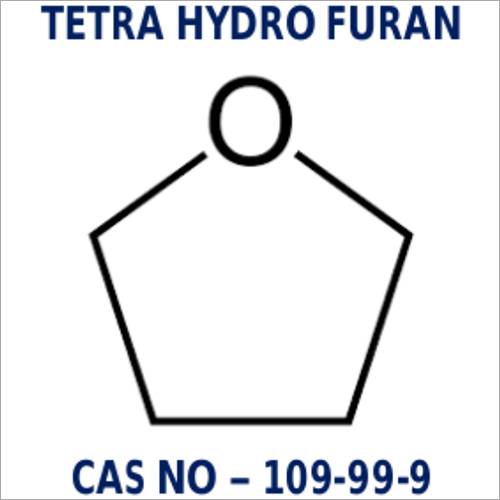
- the compound is classified as heterocyclic compound
- as a monomer in the production of polytetramethylene ether glycol (ptmeg)
- as a solvent in polyvinyl chloride (pvc) cements, coatings, in precision magnetic tape manufacture and as a reaction solvent
- versatile solvent with numerous applications in areas such as adhesives, vinyl films and cellophanes, industrial resins, elastomers, coatings and printing inks
- function as a pvc-type cleaner before joint formation
- used in consumer products as a component of cleaning fluids, paint removers and stripping fluids, functional fluids, lacquers and coatings, adhesives, and as functional fluids and corrosion inhibitors
- manufacture of industrial resins, polyurethane coatings, elastomers and printing inks pvc cleaner prior to jointing rigid pipes in compounded cements for leather, plastic sheet film extrusions film formation for vinyl top coating, cast vinyl films, coated cellophane etc
- as a pharmaceutical solvent
- solvent for anionic polymerization
Versatile Solvent for Industrial UseTHF is widely used as a solvent in industries dealing with resins, polymers, adhesives, and chemical synthesis due to its excellent miscibility with water and high purity level. Its ability to dissolve a wide range of materials enables efficient processing and formulation across multiple sectors, including pharmaceuticals and specialty chemicals.
Safety and Storage GuidelinesAs a highly flammable liquid with a low flash point of -21C, THF should always be handled with care. Store it in a cool, dry, and well-ventilated area, away from heat sources or ignition points. Proper sealing reduces peroxide formation risks, supporting safe and long-term storage for up to two years from the manufacturing date.
FAQs of CAS 109-99-9 Tetrahyfrofuran:
Q: How should Tetrahydrofuran (THF) be stored to ensure maximum safety and shelf life?
A: THF must be stored in a cool, dry, well-ventilated area, away from heat, open flames, and sources of ignition. Containers should be tightly sealed to minimize peroxide formation. When properly handled, THF maintains stability and usability for up to two years from its manufacturing date.
Q: What are common industrial applications of THF?
A: THF is extensively utilized as a solvent for resins, polymers, and adhesives. It also plays a crucial role in chemical synthesis, especially in pharmaceutical and polymer manufacturing processes, due to its high purity and miscibility properties.
Q: When should THF be used during chemical processing?
A: THF is typically applied at the blending or mixing stage of chemical processing, providing excellent solubility for various organic compounds. It is especially valuable for dissolving and processing polymers and resins prior to further synthesis or formulation.
Q: Where is THF commonly supplied and used in India?
A: THF is available through manufacturers, suppliers, and wholesalers across India. It is predominantly used in pharmaceutical, chemical, and polymer industries, often sourced in sealed drums or ISO tanks for industrial-grade applications.
Q: What are the benefits of using THF as a solvent?
A: The primary benefits of THF include high purity (99.9%%), efficient dissolution of diverse polymers and resins, rapid evaporation, and full miscibility with water. These qualities enhance process efficiency and product quality in industrial formulations.
Q: How can THFs hazardous properties be managed during use?
A: Proper ventilation, usage of protective equipment, and strict avoidance of ignition sources are essential. Ensure containers remain tightly sealed and implement regular checks for any peroxide formation. Adherence to flammable liquid handling procedures minimizes risk.


 Send Inquiry








 Send Inquiry
 Send SMS
 Call Me Free