Product Description
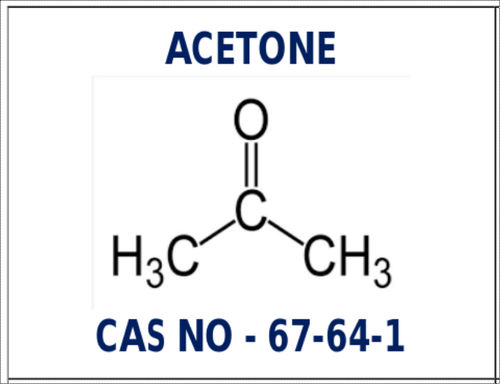
ACETONE (CAS- 67-64-1) is a colorless liquid that is extremely combustible and smells pleasant and minty. Sometimes, skin toners will contain acetone, a solvent that is thought to be non-comedogenic. It is most frequently utilized in nail polish remover. ACETONE (CAS- 67-64-1) is frequently employed as a cleaning solvent since it is miscible with water. In addition to being a prevalent chemical compound in organic chemistry, acetone is also a popular paint thinner. It is widely used in sectors including laboratory chemicals, paint manufacturing, printing, varnishes, and more.
Versatile Organic SolventAcetone functions as an effective solvent due to its fast evaporation rate and miscibility with many liquids. Its neutral pH and high purity make it ideal for laboratory processes, cleaning, extraction, and industrial manufacturing. Commonly used in pharmaceuticals, cosmetics, paints, and household cleaning, it ensures efficient operations and rapid drying.
Safe Handling and StorageGiven its high flammability (flash point: -20C) and rapid evaporation, acetone must be handled with care. Store in cool, dry, ventilated locations away from ignition sources and direct sunlight. The product is packaged in HDPE bottles, glass bottles, and drums to ensure safety and maintain shelf life.
Regulatory Compliance and Quality AssuranceAcetone meets regulatory standards, including REACH, GHS, RoHS, and CLP, and features a purity of 99.5%% min. Each batch is traceable with the HS Code 29141100 and delivered in packaging sizes suitable for laboratory, industrial, and manufacturing requirements. Shelf life is 36 months from manufacturing date.
FAQs of Cas- 67-64-1 Acetone:
Q: How should acetone be stored to ensure safety and stability?
A: Acetone should be stored in a cool, dry, well-ventilated area away from ignition sources and direct sunlight. HDPE bottles, glass bottles, and drums provide secure containment and maintain product integrity throughout its 36-month shelf life.
Q: What makes acetone a preferred solvent in laboratories and industries?
A: Acetones rapid evaporation, high purity (99.5%% min), and miscibility with water, alcohol, and ether make it ideal for cleaning, extraction, and mixing in laboratories, pharmaceuticals, paint manufacturing, and cosmetic formulations.
Q: When is acetone typically used in cleaning and extraction processes?
A: Acetone is directly applied or mixed for cleaning laboratory glassware, removing adhesives, degreasing mechanical parts, and extracting compounds due to its strong solvency and fast drying properties.
Q: Where do regulatory guidelines require acetone compliance?
A: Acetone supplied in India adheres to REACH, GHS, RoHS, and CLP regulations, ensuring its safe handling, labeling, and distribution for industrial, laboratory, and wholesale applications.
Q: What packaging options are available for acetone, and which should I select?
A: Acetone is offered in HDPE bottles, glass bottles, and drums, with sizes ranging from 500 mL to 20 L. Selection depends on the intended application, volume required, and facility storage capacity.
Q: What are the benefits of using acetone in paint and cosmetic manufacturing?
A: Acetones ability to dissolve and blend pigments, binders, and residue enables smooth mixing, rapid drying, and efficient cleaning during production, contributing to quality results in both paints and cosmetics.


 Send Inquiry








 Send Inquiry
 Send SMS
 Call Me Free