Product Description
- EASY AVAILABILITY FOR INDUSTRIAL USE.
- READY STOCK IN HUGE QUANTITY AVAILABLE
- WATER WHITE / colourless
- HIGH PURITY RANGING UP TO 99%% BY GC ALSO AVAILABLE
- MATERIAL MEETING CUSTOMER NEED CAN BE ARRANGED.
- LOW MOISTURE CONTENT (LESS THAN 0.5%% CAN BE MADE AVAILABLE)
Applications and BenefitsEthylene Dichloride is vital in the chemical industry, serving as a key intermediate for vinyl chloride and other chemical syntheses. Its excellent solvency and chemical stability enhance process efficiency across manufacturing operations. As an industrial-grade material, EDC supports robust production capabilities and consistent product quality.
Storage and SafetyProper handling of EDC is essential due to its toxic nature (Hazard Class 6.1) and flammability. Store in a cool, dry, and well-ventilated area, away from sources of ignition and incompatible substances like strong oxidizers and bases. EDCs shelf life is 12 months and safe handling measures help minimize environmental and health risks.
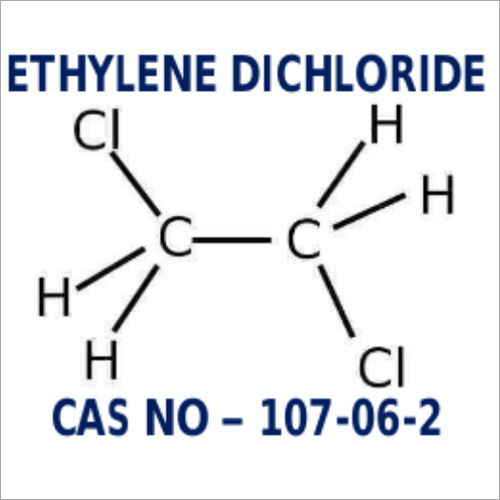
Physical and Chemical CharacteristicsWith its neutral pH, clear appearance, refractive index of 1.444 at 20C, and viscosity of 0.84 mPa.s at 25C, EDC is a versatile, stable liquid. Its chemical formula is C2H4Cl2 with a molecular weight of 98.96 g/mol, making it suitable for various industrial chemical processes.
FAQs of CAS 107-06-2 Ethylene Dichloride:
Q: How is Ethylene Dichloride typically used in industrial applications?
A: Ethylene Dichloride is primarily used as a solvent and as an intermediate for synthesizing vinyl chloride monomer, which is essential in PVC production. It also serves in chemical synthesis and other industrial processes owing to its solvency and reactivity.
Q: What safety precautions should be taken when handling Ethylene Dichloride?
A: Due to its toxic and flammable nature, EDC must be handled with care. Always use protective equipment, store it in a cool, dry, well-ventilated space away from ignition sources, and avoid contact with strong oxidizers, bases, and reactive metals. Proper containment and disposal protocols must be followed.
Q: Where should Ethylene Dichloride be stored for optimal stability?
A: EDC should be stored in a designated chemical storage area that is cool, dry, and well-ventilated. It must be kept away from incompatible substances and ignition sources to maintain its stability and prevent hazardous incidents.
Q: What are the environmental hazards associated with Ethylene Dichloride?
A: Ethylene Dichloride is classified as toxic to aquatic organisms. It should not be discharged into the environment and must be handled and disposed of according to local regulations to minimize ecological impact.
Q: When is Ethylene Dichloride considered expired or unusable?
A: EDC has a shelf life of 12 months from the manufacturing date. It is best used before this period to ensure maximum efficacy and safety, as its chemical stability may diminish over time.
Q: What is the advantage of using Ethylene Dichloride as an industrial solvent?
A: EDCs high purity, solvency, and compatibility with many organic substances make it a reliable and effective solvent in industrial settings. Its chemical stability supports consistent production and high-quality output.
Q: Which process is Ethylene Dichloride most commonly employed in?
A: The most common use of Ethylene Dichloride is as an intermediate in the production of vinyl chloride monomer, a precursor for manufacturing polyvinyl chloride (PVC) plastics and related products.


 Send Inquiry








 Send Inquiry
 Send SMS